
RahrBSG Blog
Meet Your Maltster: Cody Marshall at Rahr Malting Canada
Posted October 26, 2026 in Brewing
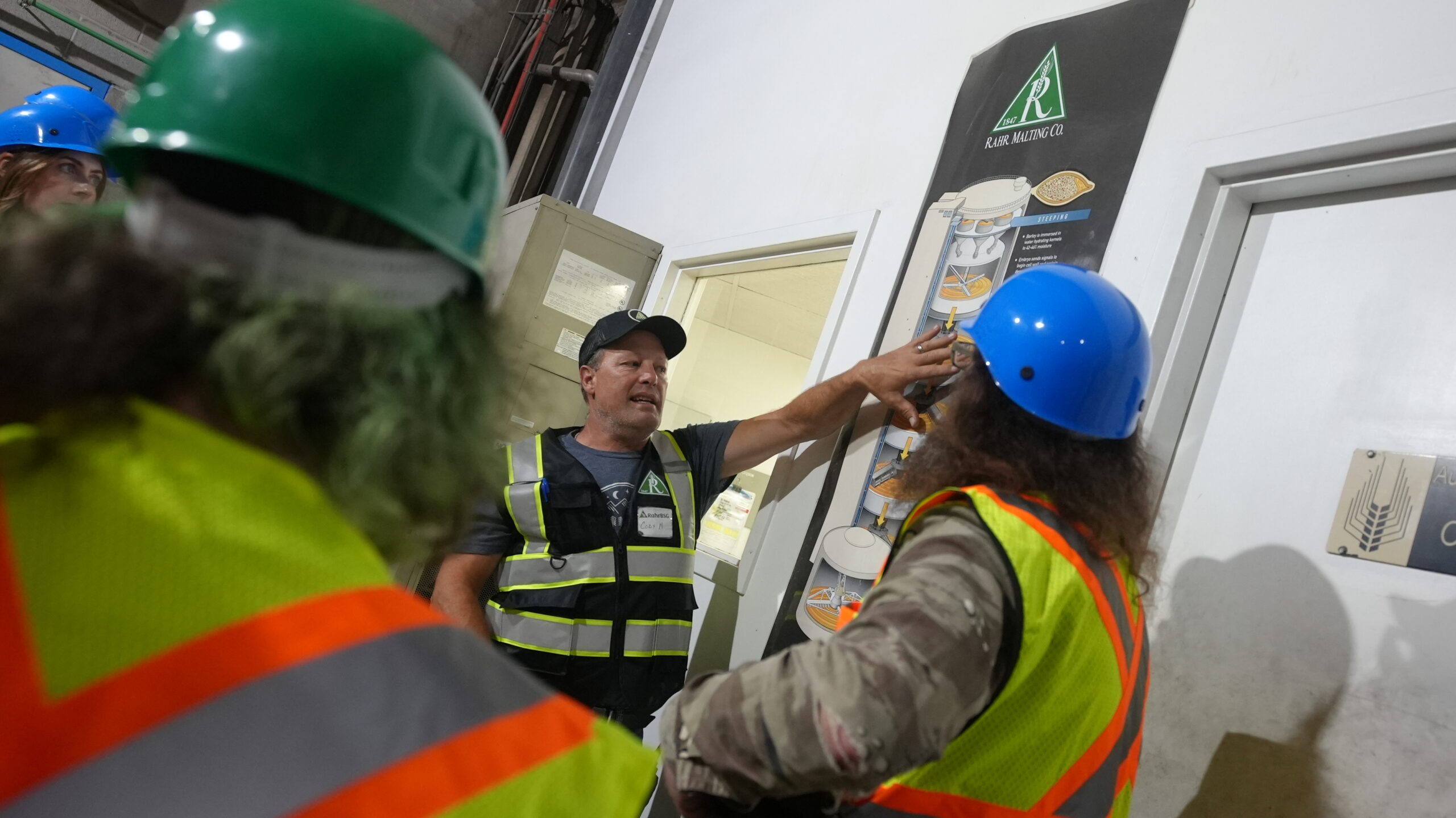
Inside Rahr Malting Company’s Alix Malting Facility
Cody Marshall on Alberta barley, malting at scale, and what happens before malt reaches the brewhouse
For brewers, malt can sometimes seem like a finished ingredient: choose a variety, place an order, mill it, and put it into the mash tun. But long before that malt arrives at the brewery, there is an extensive process involving barley growers, variety selection, storage, quality testing, steeping, germination, kilning, and constant communication between maltster and customer.
Rahr Malting Company’s Alix Malting Facility in Alberta sits at the center of that process. The facility is one of Rahr’s largest malt houses, processing approximately 460 metric tons of barley and producing about 380 metric tons of malt each day.
Cody Marshall, Site Operations Director at the Alix facility, knows a lot about Alberta’s barley-growing region, the relationships between Rahr and its growers, how the Alix malthouse operates, and what brewers might not realize about producing malt on this scale.
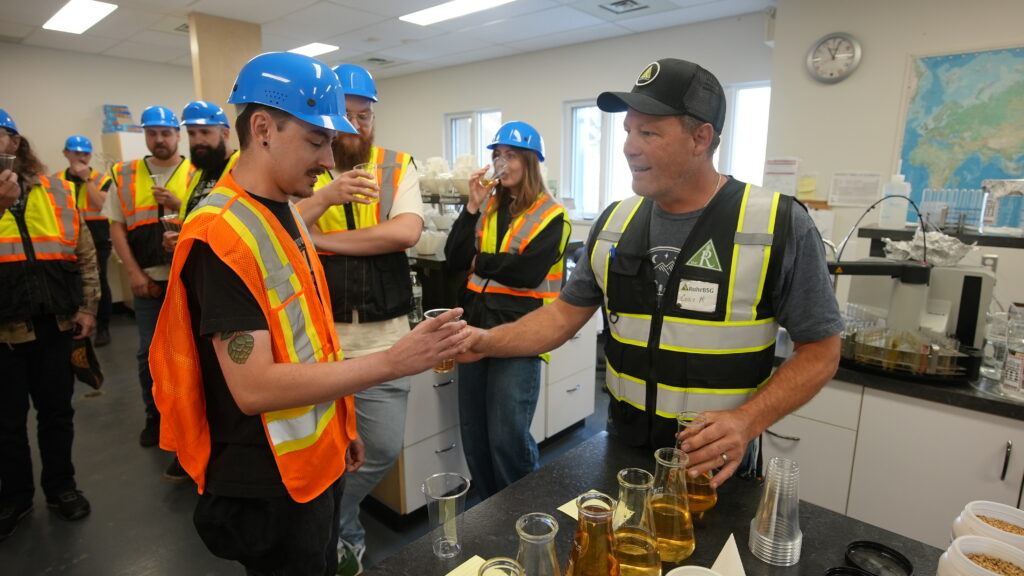
Malting Where the Barley Grows
RahrBSG: Let’s start with the facility itself.
Cody Marshall: The Alix facility is one of the largest malt houses that Rahr Malting Company owns. We have a very large batch size: 460 metric tons of barley, producing about 380 metric tons of malt every day. It’s primarily for the craft industry, for brewing and distilling across North America and into Japan.
RBSG: Why was the facility built here in Alix specifically?
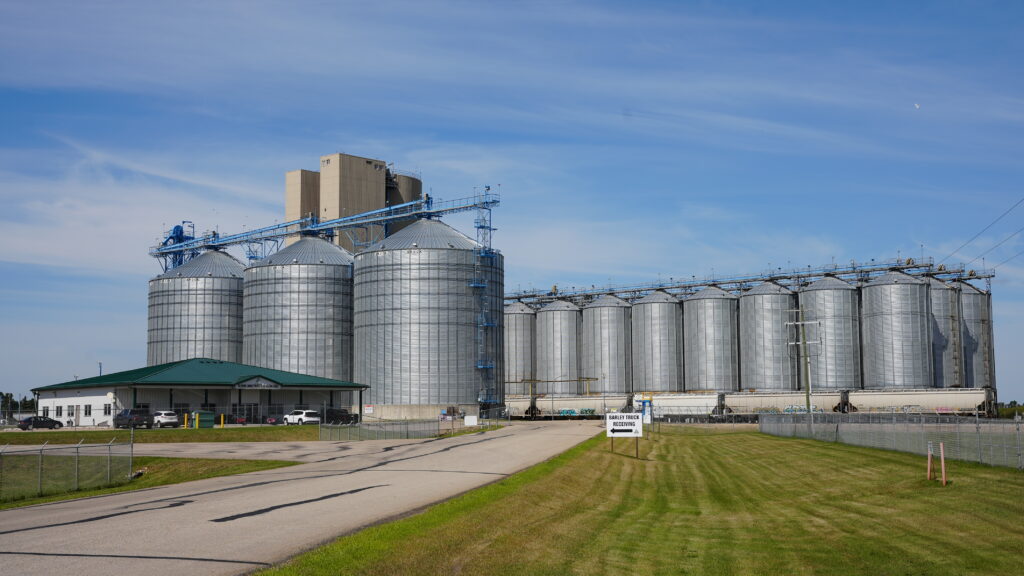
CM: There were three main reasons. One of the main reasons was the water supply from the Paskapoo aquifer. Our wells are located six miles west of us. Canadian National and Canadian Pacific Kansas City rail lines also intersect here at Alix, so we’re connected to both rail systems. The third—and main—reason is that we’re right in the heartland of the Alberta prairie malt-barley growing region.

RBSG: What makes that location unique from a barley standpoint?
CM: It means shorter hauling distances in the prairies. Alberta’s agricultural area is one of the best in the prairies of Western Canada. Some of our partner producers have been under contract with us for more than 20 years. We have about 220 producers that we deal with regularly each year. Our barley procurement group does an amazing job with those relationships. They help each other with agronomy, storage on the farm, and shipping directly to the facility. All the barley received here comes by truck, and 98% of it is delivered by the grower themselves.
RBSG: What do you work on most closely with those farmers?
CM: Mainly it’s the varieties. The variety discussion happens every year. Growers pre-plan what they’re going to grow and how many acres they want to grow of each variety. With a lot of our growers, that communication happens daily. There’s also a lot of planning for deliveries because we can’t take it all at once. They have to plan out storage space on the farm and here at the site in order to keep our varieties aligned with our customer specifications. It’s a lot of communication, and these guys do an amazing job.
A Malt House Designed for Gentle Handling
RBSG: What happens when a truck arrives at the malthouse?
CM: Every single truck, every single B-train load that is brought in here is tested. We test every hopper for a multitude of things, including variety and protein range. We also do germination tests here on site before we ever unload it. As we receive the barley, we segregate it into our barley surge bins by variety, protein level, and germination. Then we can segregate it on our clean side before we steep. That helps a lot with the outcome of our malt.
RBSG: Talk about the malthouse itself.
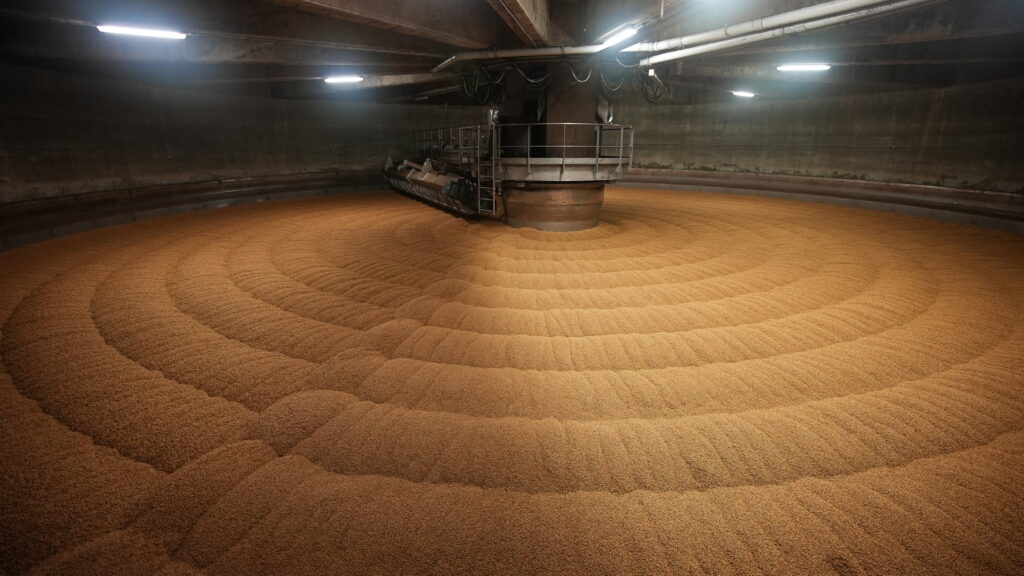
CM: This malthouse is a tower design, very similar to Shakopee House #5. We only have one house here, but as I mentioned it’s a very large batch: 460 metric tons per day is what we run through the facility. The tower design is very gentle. It doesn’t damage the malt, which is really good for quality specifications. Brewers don’t want to see broken malt. This facility treats the barley really well.
RBSG: Walk us through the process inside the Alix malthouse.
CM: It’s one tower with four germination vessels. The first two floors are steeping, then we have four germination vessels. We have two kilns.
With the tower design, we basically elevate the barley once to our steep house. We have six conical tanks that hold 78 metric tons each. Barley stays immersed in water in those tanks anywhere between 8 and 12 hours. Then we drop the water and start pulling CO₂ off. After that, it moves into our flat-bottom steep. It’s a very large, flat-bottom steep that is immersible, or we can do spray steeping on it. Spray steeping is where we spray tempered water onto the barley with full CO₂ respiration and fans running all the time.
After the 24-hour window in there, it moves into one of the four germination vessels. It transfers into what we call Germ #1 and stays there for four days. After the four days of germination are done, it gets sent to the kiln for kilning. Once that germination vessel is empty, the next steep drops into it, and then we steep again. We basically keep going through the tower, dropping the batches into each germination vessel as they move through the kilns. The next batch drops into that vessel the next day. That one goes to the kiln, and then the next one drops in. It just keeps filling in that order.
RBSG: What malt products come out of Alix?
CM: We have a few different products. A large percentage is Rahr To Thee! Pils, which is a lower-color malt that gives a crisp, clear, clean look for some lower-color beers. We also do some darker malts, up to about a 2.5 color. We’ve gone as high as 20 color for some specific customers, more of a one-off request. Mainly all the malt that comes out of here is a base malt for brewing. It could be for a small brewer buying a few bags of malt, or it could be a brewery that receives railcars. It ranges from 25-kilogram bags to 100-ton railcars.
The Story Behind To Thee! Pils
RBSG: Where did To Thee! Pils come from?
CM: We had discussions with brewers who wanted lower-color malts using certain varieties. We did some trials with about four different varieties. We use Synergy for about half of our product, and then we use a variety called Churchill. Synergy is probably the top variety grown the most in Alberta. Churchill is an up-and-coming variety that’s gaining a lot more traction. From the producer standpoint, Churchill works great. It has higher yields and very good characteristics. It’s good in the fields, it doesn’t lodge, and it has good disease resistance. We blend those two varieties together and get a nice product out of that. Our first trial answered a lot of questions and ticked all the boxes, and the product has really grown since then. We’re producing two batches every ten days of Rahr To Thee! Pils from this facility.
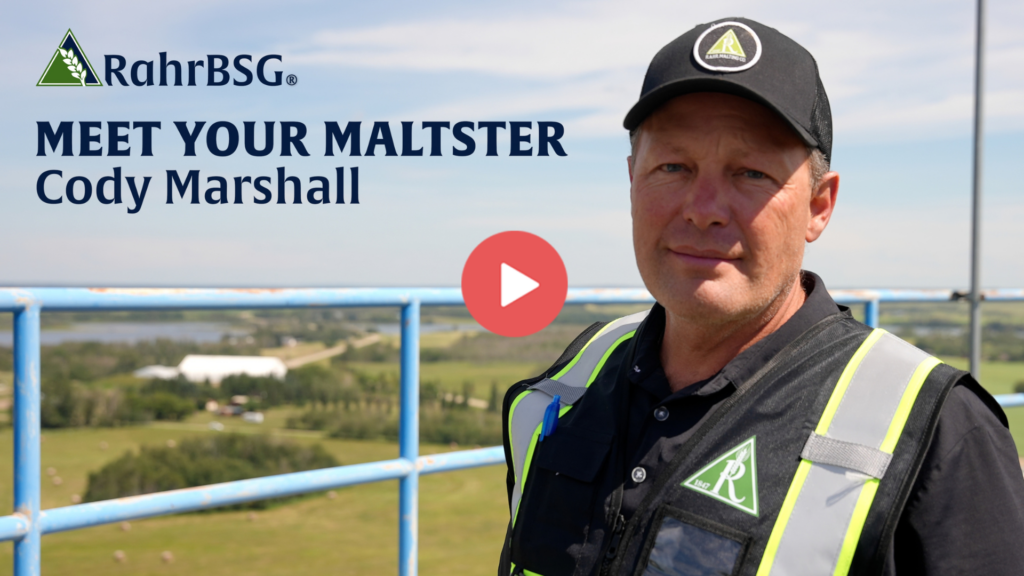
WATCH VIDEO to hear more from site operations director Cody Marshall on what makes barley growing region of Alberta so special and our Alix malthouse unique among Rahr malting facilities.
What Makes Alberta Barley Special?
RBSG: What makes the geography and climate of Alberta so interesting for the work you do?
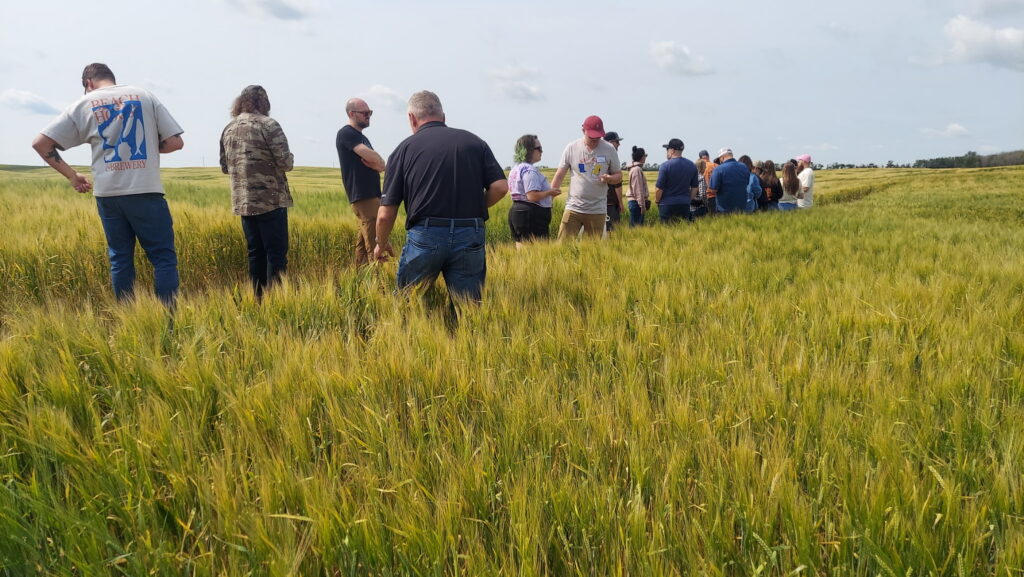
CM: It’s not a long growing period, but it is an optimum growing period some years. We have cool evenings with warm, sunny days. We get quite a bit of rain in the region, and the soils in this area are well-suited for barley. This region produces all-around wonderful barley—some of the top-class barley in the world.
RBSG: Elevation and humidity are often mentioned as important factors. Is that more about growing the barley, or more about what happens in the malthouse?
CM: More in the malthouse thing. Our humidities are generally low, certainly lower compared with our malt houses in Shakopee. Without high humidity, we’re going to have a little more control on the germination side as well as kilning. We can kiln very efficiently at this facility. We basically have a 24-hour window to kiln; we kiln quite a bit lower than that—even on the hottest summer days we can stay on track with our kiln cycles. We can also control the temperature in our germination vessels using cold well water coming right out of the ground at 6°C. In turn, we get free heated water for steeping. It’s efficient.
What Brewers Notice When They Visit
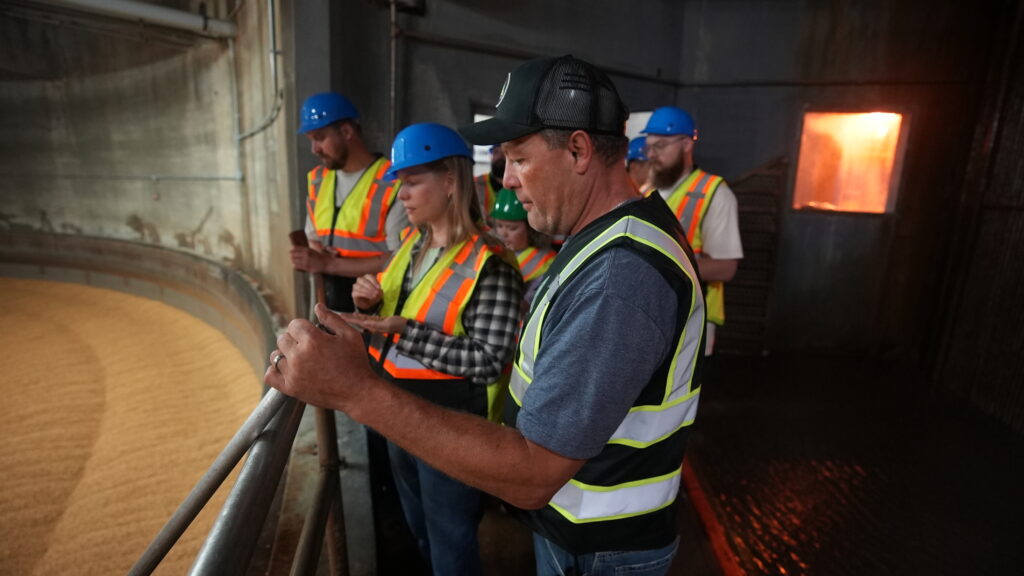
RBSG: You have a lot of interaction with brewers who come to visit the facility. What’s that like?
CM: We do a lot of visits with brewers, and the best highlight of my job is getting to deal with the brewers who use our final product. We have discussions about quality, quantity, specifications, how it’s produced, how it performs in the malthouse, and any issues we have. We talk with brewers on a regular basis. We can let them know, for example, that if we’re seeing a spike in humidity during the summer, we might have a little higher colors or a little higher moisture on the outgoing product. The relationship becomes stronger every time we have a visit. The more we can learn from a brewer, the more we can learn in our malt house.
RBSG: What tends to be the most eye-opening thing for visiting brewers?
CM: At this facility it’s just the sheer volume that we’re putting through and seeing how uniform the facility performs. It performs remarkably well for uniformity within a batch: uniform growth, uniform airflow, potable water quality from the wells—everything goes hand in hand. It all starts with our barley. And if we have good barley, you make good malt. I always say you can’t make good malt without good barley.
Quality Control From Barley to Finished Malt
RBSG: Can you talk a little more about the Quality Assurance and Quality Control side of the operation?
CM: Our QA and QC starts here with our barley program and then continues throughout the malting phase: steeping, germinating, and kilning. We test all the way through the process, and then we test on the malt side as well. After it comes off the kiln, before it’s cleaned, and also as it’s delivered to a customer, we test it all. We provide COAs to all customers. That quality control starts with the brewer’s specifications. We basically take those brewer specs and design our malt parameters for each individual batch to meet those specifications.
Malting Doesn’t Stop When Harvest Ends
RBSG: One thing that might surprise brewers is that this is a 24/7/365 operation.
CM: A lot of people just think they have nights off, weekends off, kind of thing. It never ends. It’s 24/7. We’re dealing with a live, growing product and you cannot shut down. Because of the way the facility is laid out, if we need to do work in our kilns, we have to schedule it seven days beforehand because that batch will get there in seven days. A lot of our main maintenance is done on the fly, and we have a lot of spare parts.
RBSG: How does malting happen all year when there’s only one harvest?
CM: Storage and temperature control in the facility. It’s all temperature control. Onsite we can store about two and a half months’ worth of barley. Everything else would be on-farm storage. As we require it, we put a call into our procurement team and say, for example, that we need Synergy barley at 10.5% protein. They make the calls and get it delivered. The same thing applies to Fraser, Churchill, or any other varieties. We can just make the call. The procurement group knows what’s in their bins after harvest. They call a producer and tell them which bin they want to haul, and the producer hauls it in. It’s a year-round ordeal.
You still have to store it. After barley is harvested it goes dormant. So you’ve actually got to break dormancy in the malthouse when it’s cold. That means warmer steep-water temperatures and that sort of thing. You’ve really got to monitor barley quality and condition as we’re steeping. Some years that’s tricky. We can do half and half—half new crop, half old crop—for a month or a month and a half and fine-tune the new crop as it’s breaking dormancy.
An Invitation to Brewers
RBSG: Is there anything you would like to say directly to brewers or distillers who use Rahr malt?
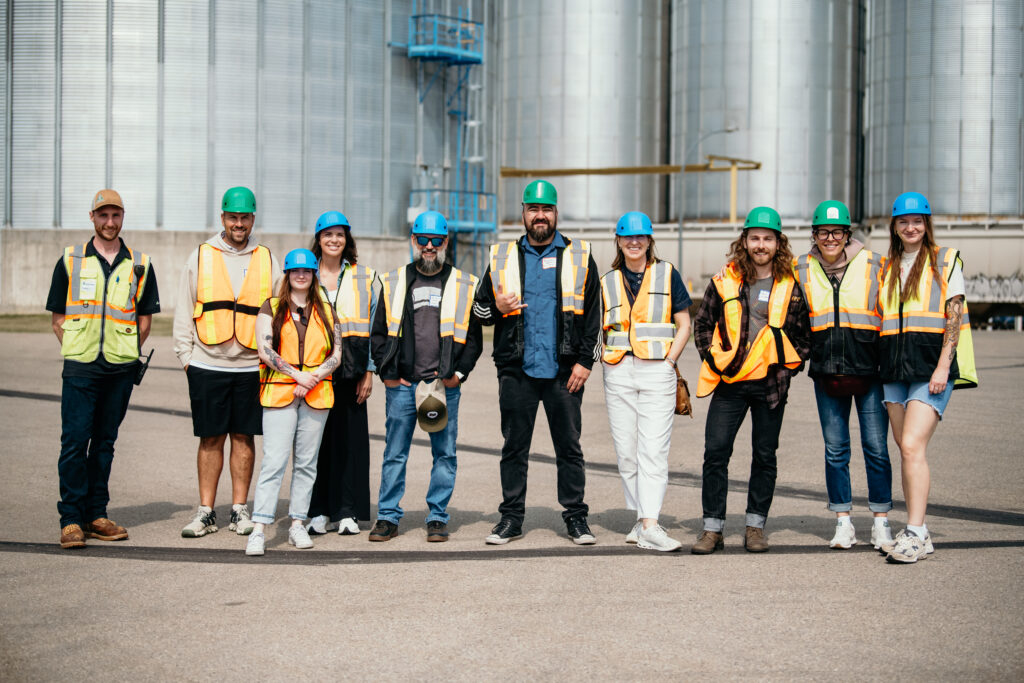
CM: Don’t hesitate to reach out to any one of our sales group. They can always point you in the right direction, and we’re always here to answer questions. Any time you ever want to discuss quality or the malthouse, come visit the malt house, don’t hesitate to reach out to your sales group. They’ll put a call into myself or one of our managers. We can always arrange a tour, a meeting, a discussion, a call—anything.
RBSG: A pint?
CM: Maybe a pint! (Or two.)
More Malty Goodness From RahrBSG Blog
Barley Days Takes Brewers Inside the Malting Process
Meet Your Maltster: Ken Smith of Gambrinus Malting
Meet Your Maltster: Richard Simpson
Meet Your Maltster: Karl Dingemans