
RahrBSG Blog
Recreating an American Classic with Rahr Standard 6-Row Malt
Posted July 1, 2026 in Brewing
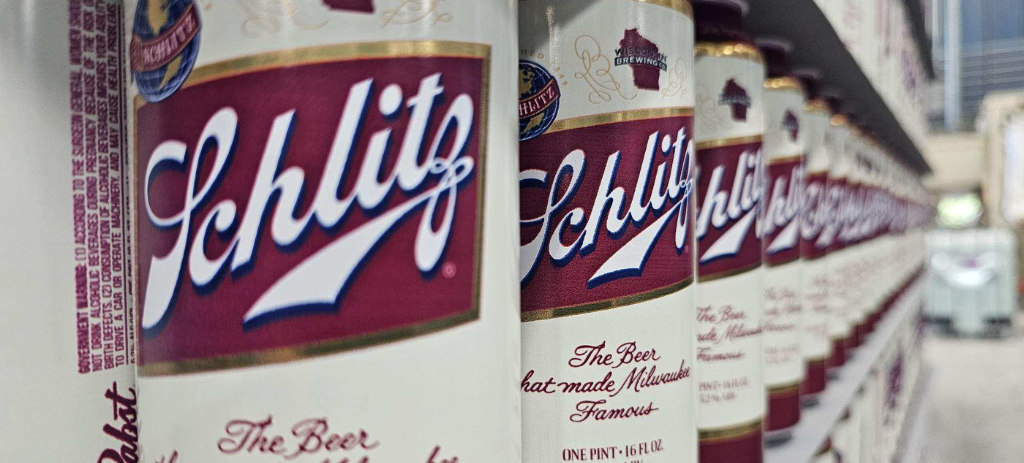
Today we take a trip back in time by way of an iconic beer. The golden days of Joseph Schlitz Brewing Company, one of America’s most cherished beer brands, are being celebrated with a special brew at Wisconsin Brewing Company that was formulated with guidance of historical brew logs from the Schlitz brewery. We talked with Wisconsin brewmaster Kirby Nelson about his tribute recipe, including the use of Rahr Standard 6-Row Malt, and the overwhelming response of the project.
From Small Tavern to National Powerhouse
Joseph Schlitz Brewing Company began in 1849 in Milwaukee as a small tavern brewery and grew rapidly during the late 19th century as Milwaukee became one of America’s brewing capitals alongside breweries like Pabst Brewing Company and Miller Brewing Company. A turning point came after the 1871 Great Chicago Fire destroyed much of Chicago’s brewing industry. Schlitz sent trainloads of beer and drinking water to the city, building customer loyalty and dramatically increasing its regional reach. By the 1880s, Schlitz had become one of America’s largest brewers.
After Prohibition in the United States ended, Schlitz rebounded strongly. From the 1940s to early 1960s, it competed directly with Anheuser-Busch for the title of America’s top-selling beer. For periods in the 1950s, Schlitz actually held the number-one spot nationally. Its slogan, “The Beer That Made Milwaukee Famous,” became one of the most recognizable advertising lines in the United States. By the mid-20th century, Schlitz was deeply woven into American culture.
It’s the beer from the brewery’s heyday that Wisconsin Brewing Company brewmaster Kirby Nelson wanted to recreate. “Schlitz was the number one selling beer in 1950,” said Nelson. “In 1948, they were doing five million barrels to Bud’s four, and Schlitz’s glory days were upon them. I decided, as best we can, to brew a Schlitz beer from that era.”
“Looking Over the Shoulders of Colleagues from the Past”
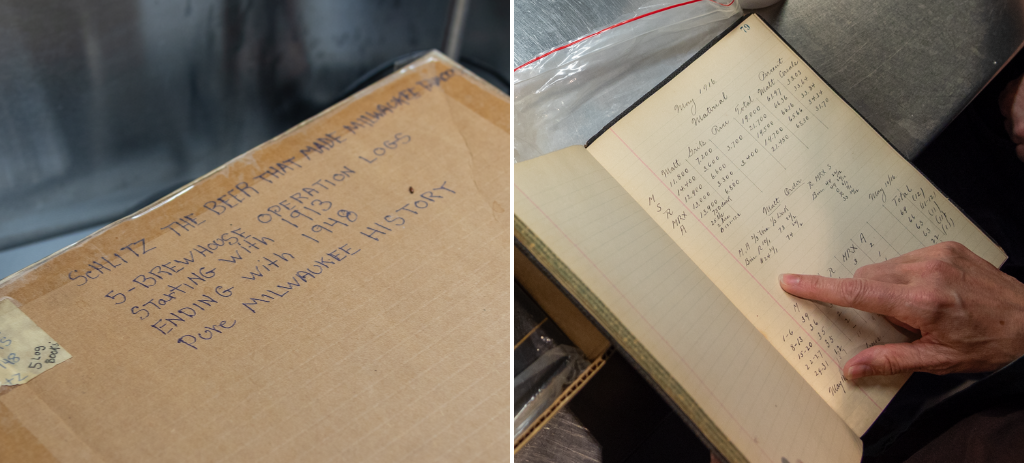
When developing a recipe to replicate a beer from more than 70 years ago, Nelson and his brew team at Wisconsin Brewing Company got a lot of help from historical brew logs from Schlitz. Turns out a good friend of Nelson’s is an avid Schlitz collector and had a box of brew logs that covered the years 1913 to 1948.
“You have to understand I’m not a beer geek,” said Nelson, “I’m hardcore brewery nerd. Going through these logs was just great. You’re basically looking over the shoulders of colleagues from the past at what they were writing down, what they were concerned with. Some of the documents are not actual brew sheets, they are brew logs keeping track of the amount of grain and hops used, more for inventory, not so much exact varieties. The specifics got more vague as the decades went on, but if you’ve been doing this long enough, you develop a feel for it. So, some of it is highly educated guesswork, but I think we’re darn close to what they were brewing around 1948.”
Brewhouse Time Machine
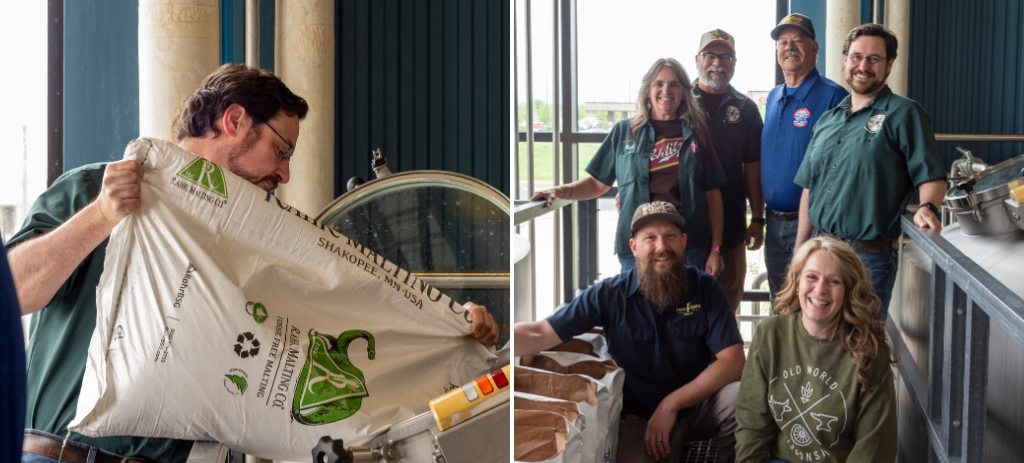
The recipe Nelson gleaned from the Schlitz was classically simple. The grist consisted of 75% Rahr Standard 6-Row Malt, and 25% yellow corn grits. Not only was 6-Row the prevalently used base malt in 1950s (paying respect to tradition), but Nelson has long preferred the flavor of 6-Row to 2-Row and uses it whenever he gets a chance, saying he finds it to have more depth and soul than 2-Row.
Nelson believes the use of adjuncts like corn and/or rice are a hallmark of the American Standard Lager style. His process for utilizing corn grits in a beer like this is something he’s been doing for many years. “You can turn your mash tun into a combination vessel relatively easily. You put in x-amount of water and malt and corn grits; that goes through its own mash, which ends with boiling. Then you add cool water to the temperature you want to mash in the rest of the malt barley, and the rest is like a regular brew day. Nothing magical or difficult, you just gotta do it.”

The Schlitz brew logs were not specific about hopping in the 1940s. But, from previous research, Nelson knew the average BUs and that Schlitz used one part domestic U.S. hops to five parts European hops. He went with the hop regimen of German Hallertau Mittelfruh and Yakima Cluster for a bitterness of 18 IBU. “Schlitz was always advertising ‘Just the Kiss of the Hops’ that American beer had before Prohibition. After Prohibition, the bitterness became milder to appeal to the masses. (Because, how do you mass market something? Offend the least amount of people possible!) The beers became squeaky clean-er and didn’t have the depth or personality. But, this one does. I’m very happy with this beer.”
Roll Out the Barrels (Uh… Cans!)
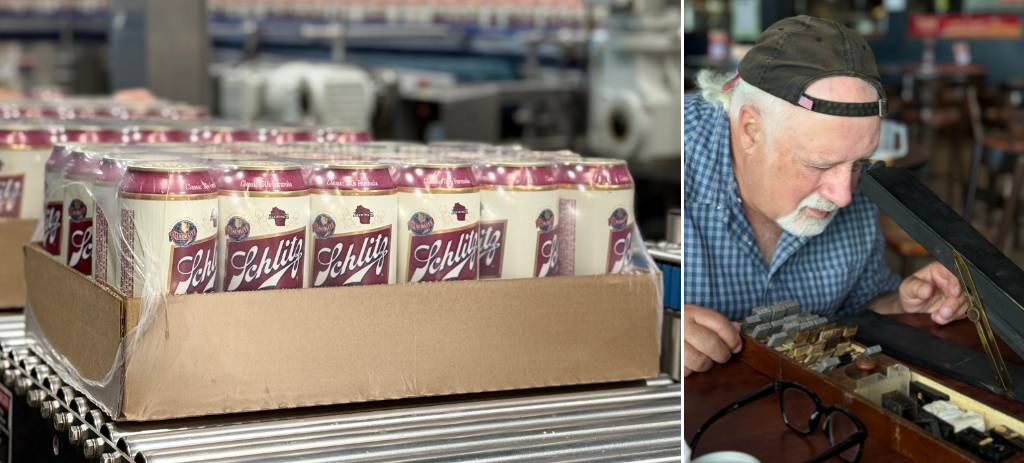
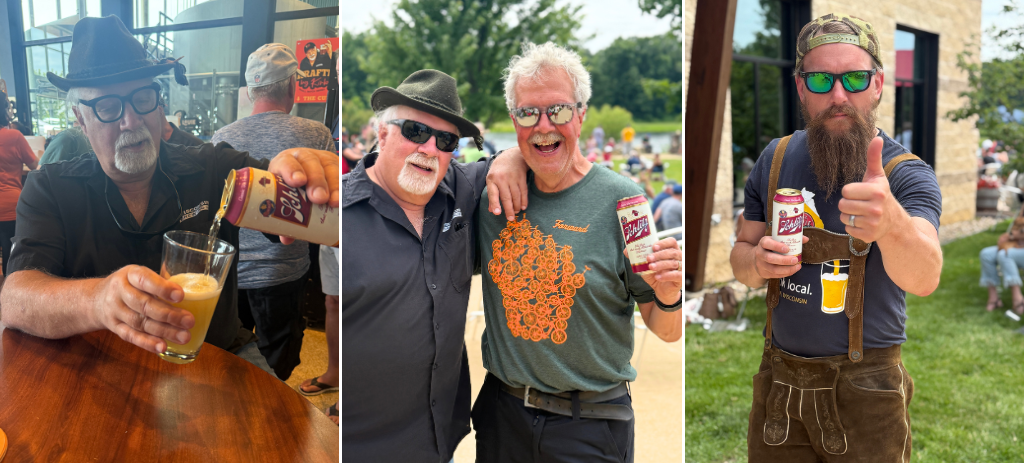
Schlitz 1948 was released to great fanfare, fabulous attire, and bro-mance at Wisconsin Brewing Company in late June 2026. For the geeks, the specs on the beer: OG – 12.6°P, AE – 2.8°P, ABV – 5.1%, IBU – 18. The color was 5.5°L, determined with an vintage piece of equipment called a tintometer; the last time this particular one had been used was 1919! Nelson said, “The release party was insane. We had folks from all over the country show up to celebrate and meet all of their newest best friends. Drank an ocean’s worth of beer and everyone had a great time. Kinda like a Grateful Dead show without acid.”
The brewery produced 200 barrels of the beer, the lion’s share of which was packaged in 16-ounce four-packs for self-distribution from the taproom. And there is a waiting list in the thousands!
“There was some kind of nerve struck with this. We thought it would just be a Milwaukee area thing, but it got picked up all over the world. For good reason Schlitz is a well-known and well-loved entity. I don’t know the future of the brand, but it was very generous of Pabst to allow us to do this. It was a wonderful experience for someone like myself who is proud of what they do as an American brewer – one of the greatest experiences of my career without a doubt.”
There is some draught available at the Wisconsin Brewing Company taproom, and the beer will also be served as Old World Wisconsin Gold at Old World Wisconsin (a regional history and heritage attraction complete with a small homebrewery of its own) as part of its 50th anniversary celebration over the Fourth of July weekend.
Related Content:
Wisconsin Brewing Company Instagram – give ‘em a follow!
American Style Lager: The Democratically Elected Head of Beer