
RahrBSG Blog
Beyond SRM: The Blueprint for Low-Color Beer
Posted June 26, 2026 in Brewing
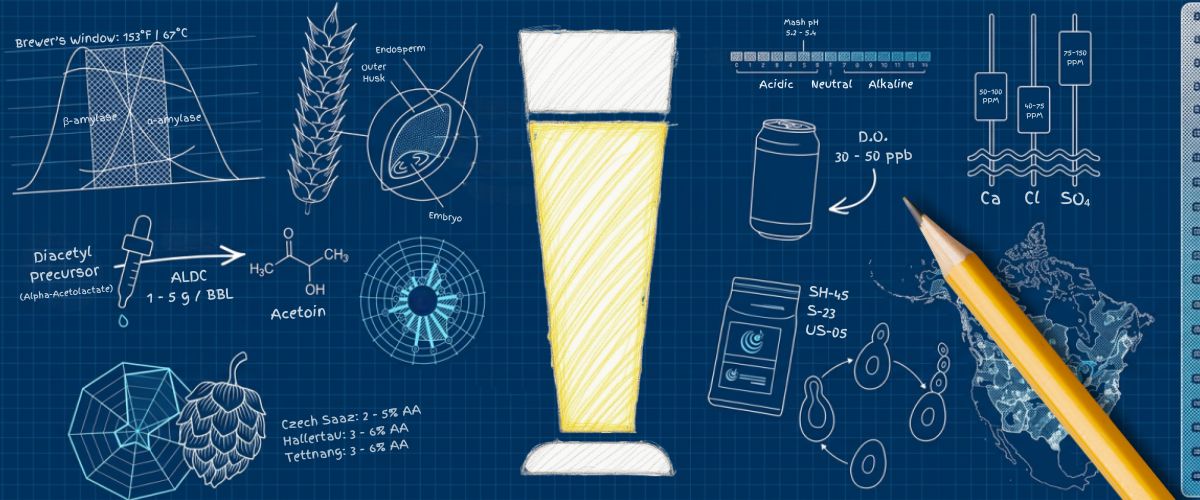
How Modern Pale Beer Styles Evolved, and a Blueprint for the Future
Consumers have often confused color as a shortcut for style, associating a beer’s appearance with a set of expectations about flavor, aroma, and drinkability. But that shortcut does not work as well as it used to.
Modern craft brewers have pushed stylistic boundaries, consumers have become more discerning, and the category has expanded far beyond traditional definitions of “light beer.” As a result, color alone has become an increasingly poor predictor of what a beer will actually taste like.
Modern low-color beer demands intention. To create standout examples of these styles, brewers must look beyond appearance and make deliberate choices in malt, water, hops, fermentation, and process that support the specific drinking experience they want to create.
Recent Evolutions of Modern Pale Beer Styles
Two beers can look almost the same in the glass and drink very differently. A Japanese Rice Lager and an Italian Pilsner may share a pale golden color, but each needs a different ingredient strategy, process, and flavor target.
A West Coast Pilsner, Czech Pale Lager, and New Zealand IPA can also sit in a similar color range while delivering very different expressions of malt, hops, water, and fermentation.
The Brewers Association’s recent updates to their published Beer Style Guidelines (used in GABF and World Beer Cup judging) reflect this shift. Over the last five years, more pale and low color styles have earned distinct competition categories. That change points to a more specific understanding of these beers among brewers, judges, and drinkers.
Notable low color beer styles added to Brewers Association competition categories over the past five years include:
2022 / 2023 |
2024 |
2025 |
2026 |
| International Light Lager | New Zealand-Style IPA | American Light Lager | Rice Lager |
| Contemporary American-Style Lager | West Coast-Style IPA | Italian-Style Pilsener | Czech-Style Pale Lager |
| American-Style Pilsener | NA Categories | Mexican-Style Light Lager | |
| American-Style Cream Ale | Classic NA Ale or Lager | West Coast-Style Pilsener | |
| International Pale Ale | Hoppy NA Beer | Mexican-Style Pale Lager | |
| International India Pale Ale | Specialty NA Beer |
The point is not just that more categories exist, but that brewers and drinkers now see these beers as distinct styles with their own identities. BA competition guidelines change every year, but the recent growth of light beer categories is worth noting. Styles that once seemed niche or regional are now earning broader recognition.
What once may have been grouped under “lager,” “pilsner,” or “IPA” has become a more specific set of styles. Each one comes with its own ingredient needs, process choices, and flavor expectations.
The Blueprint for Modern Low Color Beer
Start with the right malt
Modern low color styles demand a lot from malt. With little color and less malt intensity to hide behind, small differences in barley quality, modification, protein, moisture, and production can show up in the finished beer. That is why pale malt selection should go beyond SRM.
“We have loved using Rahr To Thee. It has become an extremely versatile ‘Swiss Army knife’ for us. It allows us to create anything from clean, crisp West Coast IPAs to robust beers with excellent mouthfeel.
The light color makes it incredibly adaptable, and its drinkability is impressive even when it stands alone in our light lager. The low color and sweetness levels also provide a perfect foundation to showcase our hop-forward beers.”
Shawn Turner, Head Brewer
Goldwater Brewing Co. | Scottsdale, AZ
Quote as featured in Beervana
Producing low color malt is not simply a matter of kilning less. It takes careful control of barley selection, modification, protein, moisture, and kilning conditions.
During kilning, amino acids, sugars, and heat interact through Maillard reactions. That is where color develops. Managing those reactions takes tight process control. The lower the malt color, the less room there is for inconsistency.
Color may be the most visible spec, but consistency, modification, protein management, and process control often separate a good pale malt from a great one.
The lower the color, the higher the standard. RahrBSG works with maltsters who understand that level of control. To help brewers build better low color beer, we have highlighted five malts suited for today’s most popular pale styles.
Low Color Malt Specs
Why water chemistry matters so much in low color beer
As pale beer styles have become more specific, water chemistry has become more important. Clean lager styles often work best with low mineral, low alkalinity water. This lets subtle malt and fermentation character come through. Low residual alkalinity also helps brewers reach the right mash pH with pale grists.
Hop forward pale styles may benefit from higher sulfate, which can sharpen hop expression and support a drier finish. Chloride can add roundness and soften the palate. In many pale beers, the sulfate to chloride balance affects flavor perception more than color does.
Five beer styles with nearly identical color | Five different water profiles
These profiles are intended as starting points, not universal specifications. Final targets should account for source water, grist composition, mash pH, hop load, yeast strain, and desired sensory outcome.
These adjustments may seem small, but they can have a clear impact in modern pale beer styles. As brewers build more specific low color beers, water targets should match the style and the intended drinking experience.
Build flavor with hop selection
When color and darker malt character take a step back, hop selection becomes more important. So does hopping method. Modern pale beer drinkers are not only choosing between “hoppy” and “not hoppy.” They are choosing the specific hop profile they want from each style.
Comparing Popular Hop Combinations for Low Color Beer Styles
Use process aids and enzymes with purpose
Process aids and enzymes help brewers improve consistency, manage stability, and shape the finished beer to fit the intended style.
Pale beers leave less room for error. Haze, weak foam, over attenuation, hop creep, oxidation, and fermentation off flavors can stand out quickly in a clean, lightly colored beer. The right process aid can help manage those risks before they reach the glass.
| Process Aid | Activity | Brief Description |
| Amylo™ 300 | Amylo-glucosidase enzyme | Used to increase extract levels and improve fermentability in high adjunct mashes. |
| Bioferm™ LC | Fungal alpha amylase | Improves wort fermentability by breaking down complex starch molecules into simpler fermentable sugars, especially maltose. |
| Bioglucanase® | Beta-glucanase enzyme | Degrades beta-glucans and arabinoxylans, reducing wort viscosity and improving filterability. |
| Biofoam™ K | Propylene glycol alginate | Used as a foam stabilizer by enhancing the natural foam components of beer. |
| FermCap® | Dimethylpolysiloxane | Foam control agent that prevents boil-overs and frees kettle capacity by managing foam formation. |
| Biofine® Clear | Silicic acid solution | Vegan-friendly purified colloidal solution used for the rapid sedimentation of yeast and other haze-forming particles. |
| Chitosan | Chitosan solution | Aids yeast sedimentation and protein removal in post-fermentation. Available as a fungal or shellfish derivative. |
| Whirlfloc® | Carrageenan fining agent | Promotes hot and cold break and trub formation, improving wort clarity and beer brilliance. |
| Brewers Clarex® | Proline specific endoprotease | Degrades haze-active proteins, enabling gluten reduction and improving clarity without filtration. |
| Biomatex L ALDC | Alpha-acetolactate decarboxylase | Used to reduce diacetyl and significantly shorten maturation time during fermentation. |
→ Download this chart as a PDF
For help choosing the right product, see our Guide to Process Aids. You can also use our Process Aids Dosage Calculator to estimate dosing.
Yeast selection for pale beers
In low color beer, fermentation character is amplified. Sulfur, diacetyl, acetaldehyde, ester balance, attenuation, and yeast derived mouthfeel can all shape whether the beer feels polished or unfinished.
The goal is not always to choose the cleanest yeast. The goal is to choose a strain that supports the intended flavor profile and allows the malt, hops, and water chemistry to do their job.
Yeast and hops also interact during fermentation. Some strains can convert hop derived precursors into aromatic thiols and esters. Other strains are more neutral and allow delicate noble hop character to stay crisp and restrained.
The graph below shows this point. Compared to traditional lager strains, Fermentis SafLager™ SH-45 has a stronger ability to release free thiols from glutathione-bound hop precursors. In practice, the same hop bill can produce a different sensory outcome depending on the yeast strain.
Release Potential for GSH-thiols in Fermentis Yeasts
For styles like New Zealand IPA and hop forward lagers, a yeast with strong biotransformation potential can help increase the impact of modern hop varieties. Styles like Italian Pilsner and Czech Pale Lager often benefit from more restrained strains that preserve floral, herbal, and spicy hop character.
The cleaner the beer, the more important these interactions become.
A hop bill that works well with one strain may taste different with another. Strong low color beers are built around intentional pairings of malt, water, hops, yeast, and process.
Fermentis SafLager™ Applications
Low color beer is no longer a single lane. It is a growing group of specific styles that may look similar in the glass but require different decisions in the brewhouse.
As brewers build beers around clarity, drinkability, hop expression, fermentation control, and repeatability, color alone is not enough.
The strongest pale beers come from the full blueprint. The right malt. The right water. The right hops. The right yeast. And the process control to bring them together.